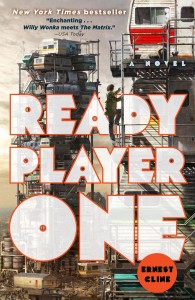
 I re-read Ready Player One recently and had to update and rewrite my review for it. It’s now live over at SFFWorld, so be sure to check it out to see just how much I love this book.
James Halliday is the creator of the OASIS, initially an MMORPG that has since turned into a bedrock of civilisation: a virtual reality world that everyone uses from an early age. From work to play, the OASIS has anything and everything that anyone could possibly want. When James Halliday dies and his will is announced to the world the OASIS takes on a new fervour to many – the search for Halliday’s Easter eggs with the promise of the ultimate prize at the quest’s end.
…
With Halliday being an 80’s kinda guy the novel is firmly rooted in that decade as far as the nostalgia, geekiness, and nerdisms go, and with his legacy up for grabs it makes perfect sense that so many people would embrace that era and study it to death. There are things here that go over my head for sure, but I’m geeked up enough to know a great deal of the references and enjoy them fully. The prose oozes charm and nostalgia, and once you start reading you’ll find it nigh on impossible to put it down.