
Reviewed by Stephen Aryan
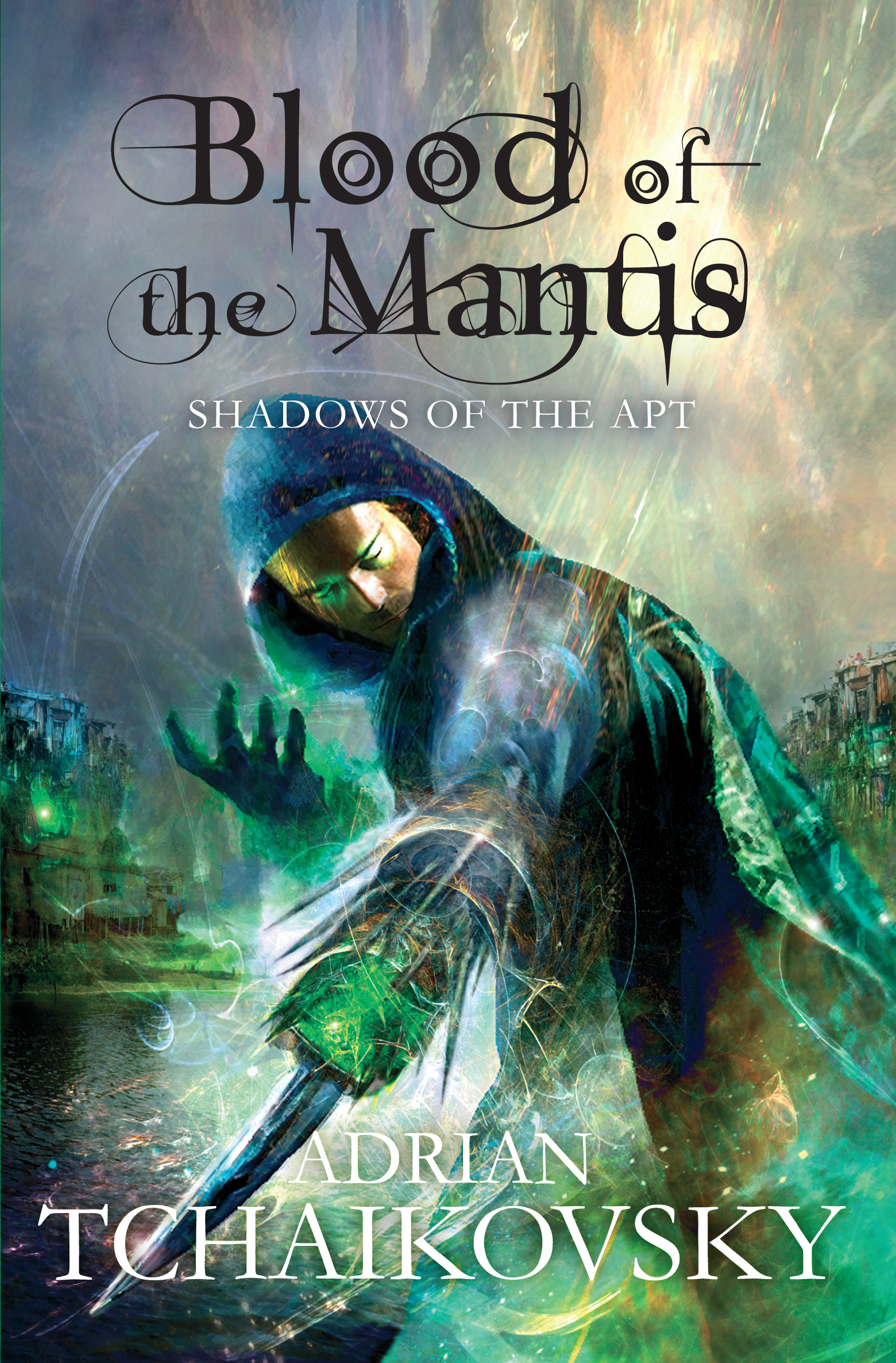
Blood of the Mantis is the third novel in the ‘Shadows of the Apt’ series, a fantasy epic with a unique aspect, Insect Kinden and their Art. After ‘Dragonfly Falling,’ which was a mammoth book both in terms of being a siege book full of giant battles and a hefty read, I wondered where the series would go next and if Tchaikovsky would try to top it with an even bigger battle. Thankfully he doesn’t do that but instead takes the book in a different direction, focusing on another aspect of the story; espionage. At this point in the series we already know that the Lowlands are slowly being drawn into a conflict with the Wasp Empire, piece by piece, and eventually there could be a conflict with them on a scale never seen before.
 The Wasps are nothing if not flexible and clever, as they don’t always arrive with the clash of swords and the pounding of many feet. The Lowlands are a diverse and rich world where each Kinden has their own unique beliefs, strengths and weaknesses. This means to conquer some Kinden the sword is necessary as they will fight to the last man (like the Ants), but there are also those who acquiesce at the first sign of trouble and become slaves and servants. But of course nothing is exactly as it appears. For example, a slave could be someone who agreed to life of servitude because they were ordered by their spymaster in order to get closer to the enemy.
In ‘Blood of the Mantis’ the story moves to two new parts of the world we’ve not seen before, but one of them has been hinted at before; the Spiderlands. When some of the main characters arrive we find the Wasps are already there in small numbers, gathering information, trying to find weaknesses and a way to beat the cunning and erudite Spiders who have schemes within schemes. Double and even triple agents would not surprise me where the Spiders are involved. It is a matter of course for them, and they view the intelligence community and plans of others with scorn and some derision.
Without spoiling anything, the story introduces us to new Kinden who are fascinating and odd, and very alien in some ways, as are their customs and culture. Characters are thrown in at the deep end and they have to swim or sink, which makes some scenes feel odd at first, but it also makes them realistic. There are no giant data downloads or pages of exposition. We find out when the characters do, so there is no dramatic irony and sense of waiting for them to catch up with what we already know. The pace is snappy, and as mentioned this book is shorter than its predecessor, so it doesn’t hang around and is a very different animal.
As ever, Tchaikovsky does an excellent job of creating unique and distinct races that are wholly his own, and the combination of technology, hints at vast magic and demonstrations of Kinden Art makes for a fresh and interesting combination. The cast of characters continues to grow, whilst also focusing on some old favourites.
Tchaikovsky has crafted a world in delicate detail and is telling his own story in his own way . He started with a basic principle and is building on it with every book in the series. He has a unique voice in the fantasy industry and this book is a great addition to an epic and complex story.